
Two wildlife photographers travel through western Iceland in search of Arctic foxes. On Hornstrandir, hours of waiting are distilled into a few fleeting seconds. In the fjord, two humpback whales surface so close to the boat that their breath can be heard—and smelled. And when, at 00:36, even the earth seems to fall into the rhythm of the journey, one question suddenly matters: what would they take if they had to leave at once? The answer lies on the bedside table.
Listen to this story
Iceland Never Stands Still
0:00
0:00
Three Years Before Iceland
Years before Alex and I sat aboard a small ferry bound for Hornstrandir, her photographs on Instagram had already fascinated me.
I was at the beginning of my journey into wildlife photography. Her images were technically impressive, but that alone was not why I kept returning to them. They did more than show wildlife. They told a story.
Soon afterwards, I travelled to Spain to join one of her workshops. There I met the photographer behind those images—and a person who spoke about wildlife with the same excitement visible in her work.
That first meeting led to more journeys: Tanzania, Finland, Botswana and South Africa. With each one, our photography changed—and so did our sense of how we wanted to encounter wildlife. We shared a similar outlook and the same passion without searching for the same images.
We also shared a dry sense of humour and a similar calm in situations others might call adventures. Remote landscapes, difficult journeys and close encounters with large wild animals were neither tests of courage nor backdrops to us. They were part of what drew us out there. We did not seek danger; we learned to assess it. We met animals with respect—as living beings with their own behaviour and character, not as canvases onto which people project their fears.
When Alex said she wanted to explore Iceland, I did not need long to think.
“I’m coming with you.”
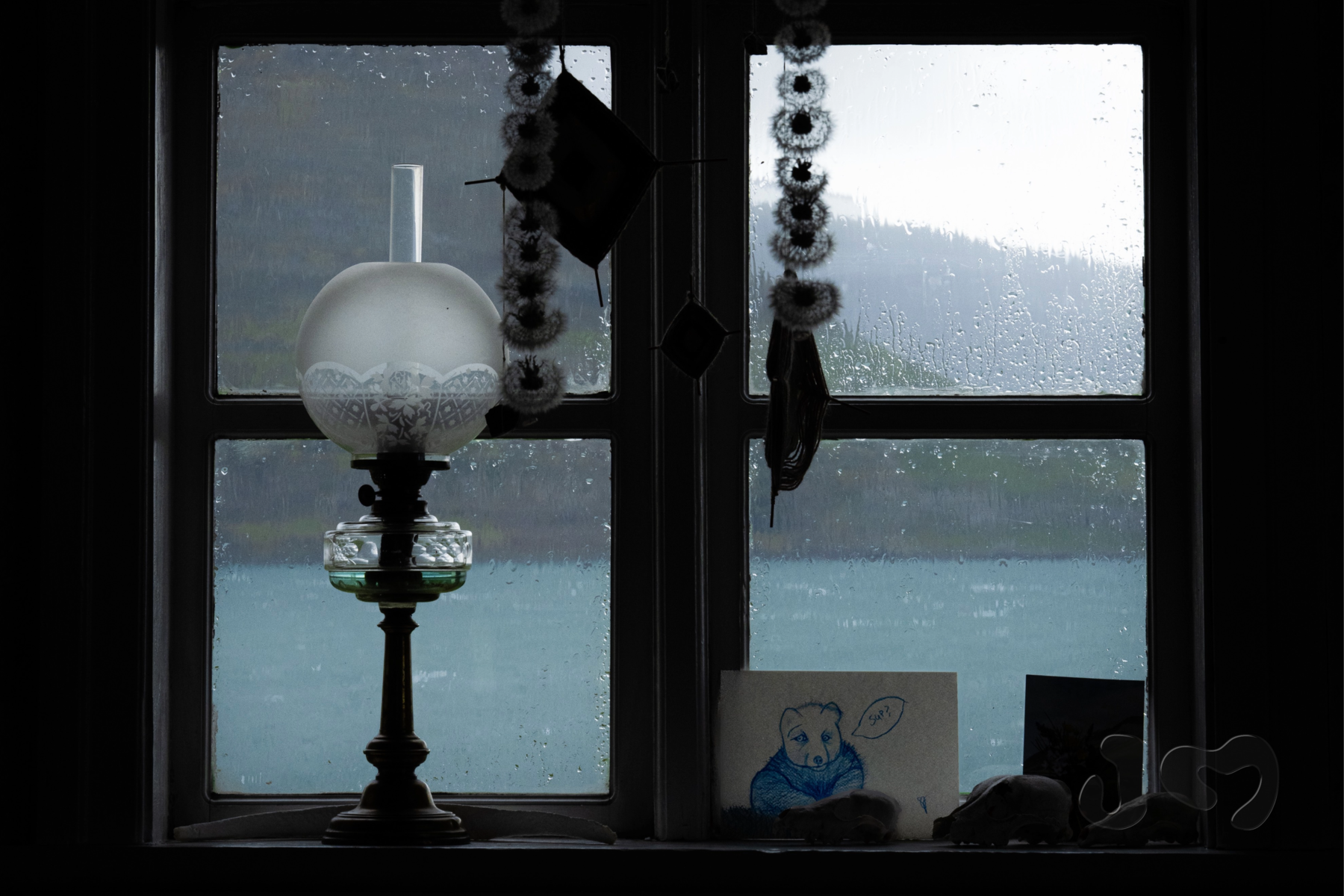
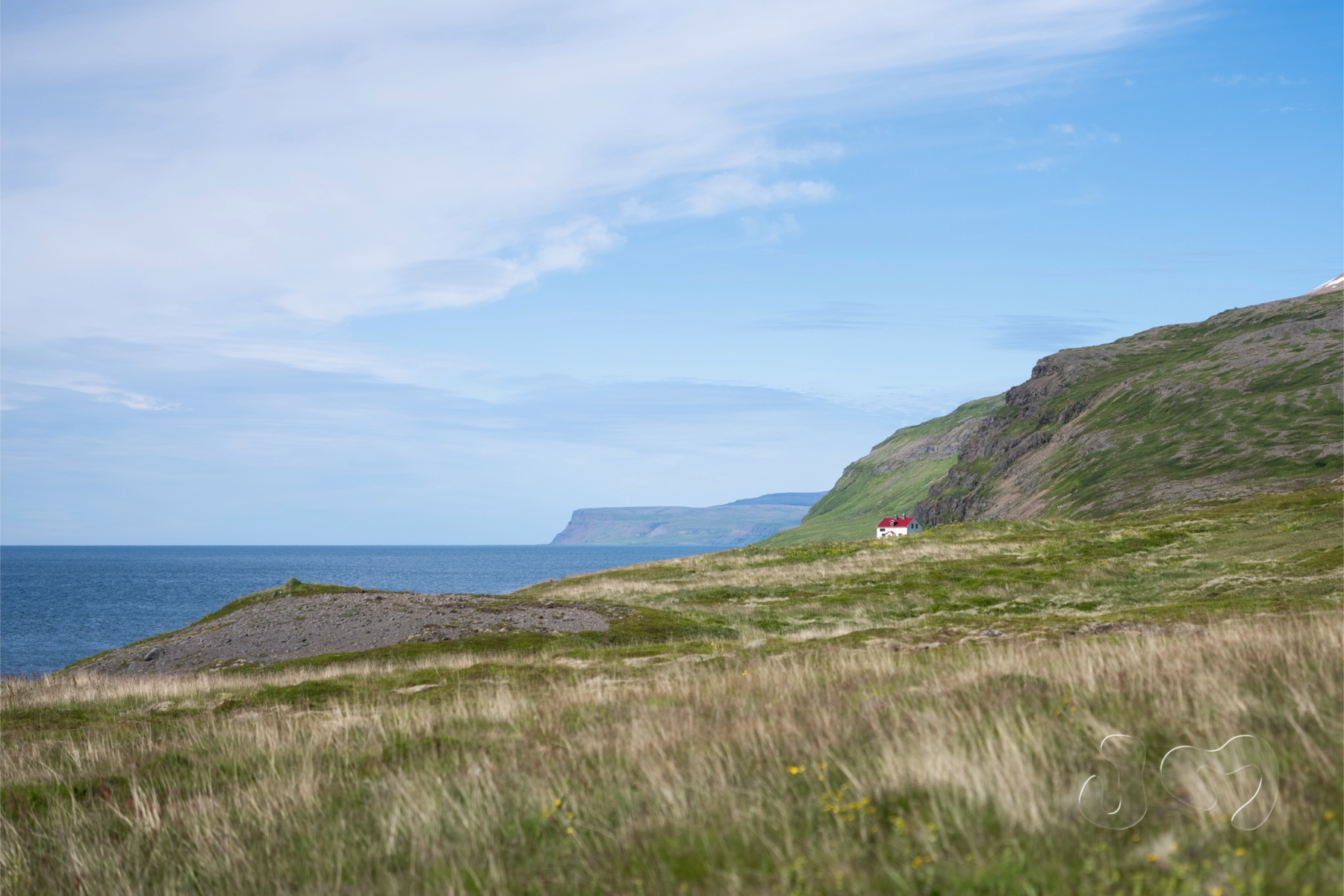
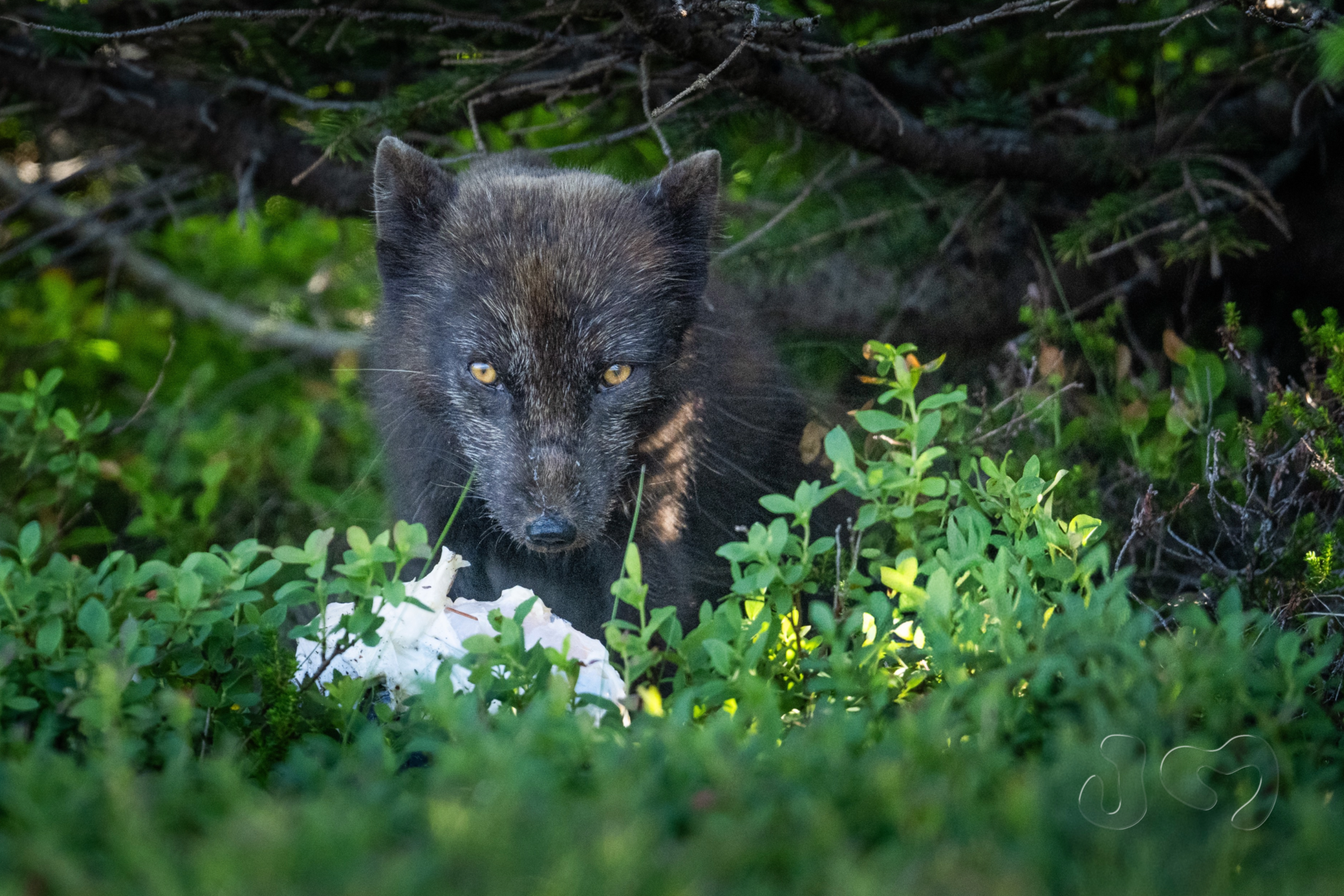
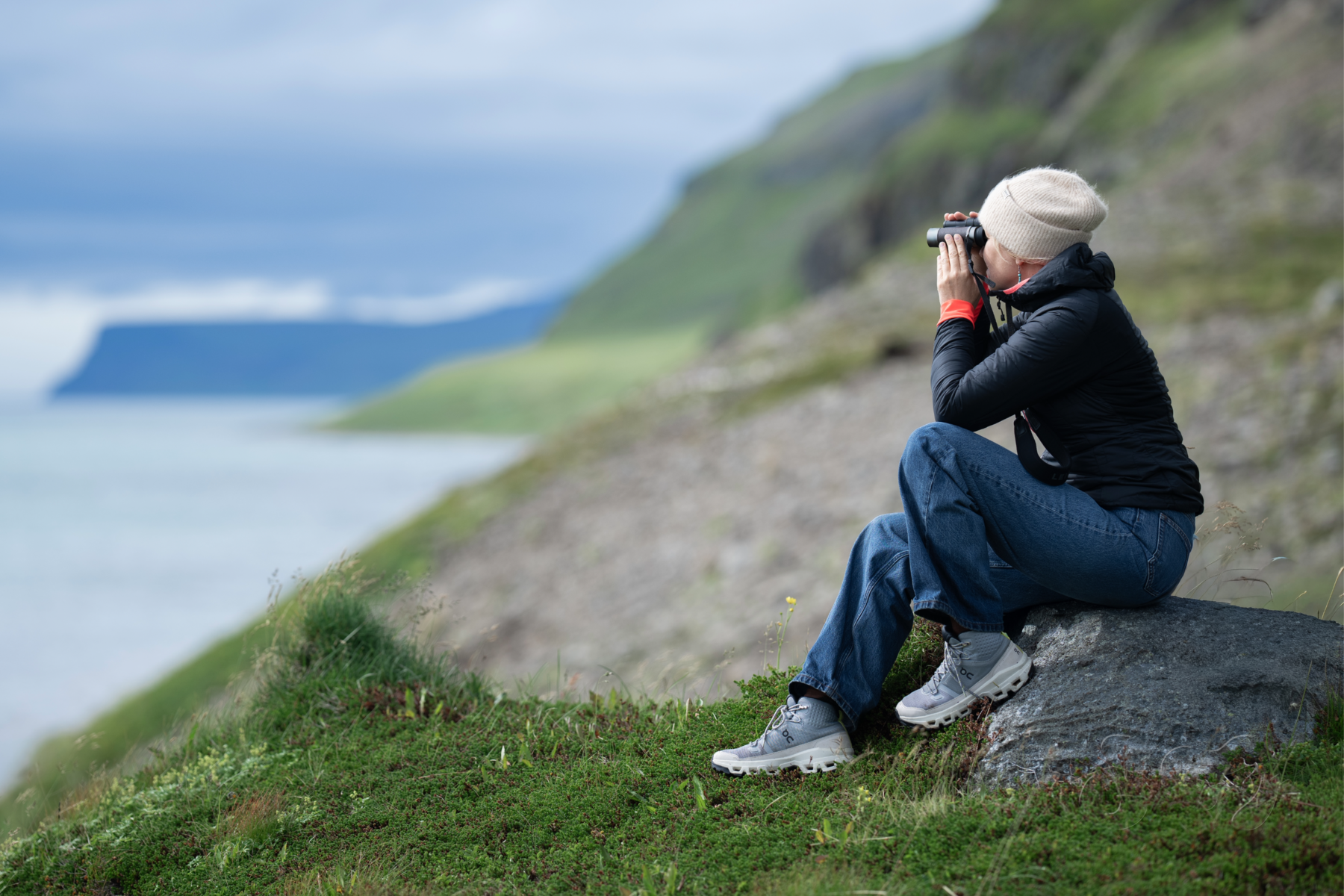
Between fjord and Arctic foxes.
We Came for the Foxes
The small ferry to Hornstrandir rolled through a restless fjord. Low clouds drifted between the mountains, waves struck the hull, and even in the middle of July the temperature barely reached twelve degrees.
There was no jetty at our destination. We had to transfer our luggage and all our camera equipment into a small inflatable boat that rose and fell beside the ferry with every wave. As the bags were passed down, every handover had to be precise. No one wanted to watch the camera gear disappear into the fjord.
As soon as we were aboard, the engine refused to start. Driving rain and spray pooled in the bottom of the boat. Our guide bailed out the water while Alex shielded her cameras with her body as best she could.
The first thing we could make out clearly was a small white house with a red roof. We would spend the next few days there. The slopes rose behind it; the fjord lay in front. Around it stretched an expanse so vast that even the house nearly disappeared.
To Alex, our arrival felt like the opening of an Agatha Christie novel: an isolated house, no signal, a group of people who barely knew one another—and really, all that was missing was for someone to vanish without a trace over dinner.
We had come for the Arctic foxes.
Before the journey, we had repeatedly read how curious and unafraid of people they were on Hornstrandir. It almost sounded as though all one had to do was arrive and bring a little patience.
On the first afternoon, we waited for hours.
Nothing.
Alex kept watch down on the beach. I sat higher up the slope, where I could see both the shoreline and the surrounding terrain. Eventually, she came up to me.
“Did you see the fox? It just picked something up down on the beach.”
I shook my head.
“I thought you’d seen it. It just came up this way.”
We picked up our cameras and climbed the slope together.
That fox eluded us. Later, however, a cub sat in front of us. It was barely larger than a house cat, curious and cautious in equal measure. Again and again, it slipped into the shrubs, only to emerge moments later and watch us once more. Soft evening light fell across the slope behind it.
The reports about Hornstrandir had not lied. They had simply left out one crucial detail: just how fast an Arctic fox can be.
For a few seconds, one would appear on the beach, vanish behind a hill or race uphill with its prey. We had to climb those same slopes under the weight of our equipment. On this terrain, the foxes were simply the better athletes. Often, an animal was gone before the camera reached our eye.
The foxes came down to the shore particularly at low tide. Soon afterwards, we would see them heading back up the slopes with surprisingly large fish in their mouths. Our Icelandic guide, a biologist, explained what we were watching: the foxes had not caught the fish themselves. Seals left behind the remains of their prey on the beach, including Atlantic wolffish—heavy-bodied fish with powerful heads and conspicuous teeth.
At times, the search became frustrating. Even a longer encounter was of little use if the sun was already high: hard contrasts stripped both fur and landscape of every subtlety.
Sunshine was forecast for the following morning. To avoid precisely that light, I set my alarm for four o’clock.
By late July, it barely became dark. The sun had already risen, but in our valley it remained hidden behind the ridge. That gave me time.
Shortly after setting out, I discovered a female fox with her cub. They climbed the slope. I followed at a respectful distance and let them set the pace.
With every metre of height, the ground changed. Soft moss spread between rocks and waterlogged patches, threaded with small streams. Then the first warm light reached the slope.
The mother and her cub ran straight through it.
Later that day, I noticed a small black dot against a rock in the distance. Through my binoculars, I recognised an Arctic fox.
I approached slowly. He remained where he was. Even when I sat down in the grass two or three metres away, my presence did not seem to disturb him.
Shortly afterwards, he fell asleep.
There was no mobile signal on Hornstrandir, so I could not contact Alex. But from a distance, she noticed that I had not moved for some time. She came over slowly and carefully sat down beside me.
The fox continued to sleep. Only when a group of hikers with trekking poles passed did he occasionally raise his head. Our presence did not disturb him.
After a while, he stood and called.
For the first time, we heard an Arctic fox call.
Within a Whale’s Breath
I had booked a small whale-watching trip in Ísafjörður as a pause in our main photographic journey. It was only shortly before we set off that Alex told me she had never seen a whale before.
A blow appeared in the distance. Soon afterwards, two humpback whales surfaced, breached repeatedly in the fjord and slapped the water with their long pectoral fins.
Then they came to the boat.
They surfaced immediately beside us, swam beneath the boat and remained nearby for around ten minutes. We watched them with the same curiosity they seemed to show us.
We heard every breath.
And we could smell them.
Whales have a surprisingly pungent smell—almost like a fishing harbour where the day’s remains have sat too long in the sun. At that moment, we could not have cared less.
These were the first whales Alex had ever seen. So I was not only watching two humpbacks beside the boat, but Alex meeting whales for the first time.
Only later did she tell me that she had cried. At some point, the camera had become irrelevant. In the presence of those immense, free animals, she felt how small a human being becomes before something so elemental—something that was here long before us and exists entirely independently of us.

One Hundred Roubles and a Dark Beach
I have an Icelandic horse waiting for me at home. So before the journey, I already knew that I wanted to ride one in Iceland itself.
After a moment’s thought, Alex decided to join me.
The morning brought a brilliant blue sky and hardly any wind. Our guide soon asked whether we wanted to try the tölt. Alex was riding an Icelandic horse for the first time and quickly found the rhythm.
The ride carried her thoughts far back—to a remote Russian village where she had spent some time at the age of fifteen.
A woman there let her take her horse for an entire afternoon in exchange for one hundred roubles. What remained was the memory of complete freedom, of a time when the world still seemed wide and open before her.
All those years later, she was sitting on an Icelandic horse, surrounded by a landscape that seemed unreal even to her. What had begun as my wish for this journey carried her back into her own youth.
When we reached the beach, the next question came:
“How about a gallop?”
We looked at each other for a moment.
Then we were off.
Before us, the dark beach. To our right, the turquoise Atlantic. Behind us, the snow-covered Snæfellsjökull.
A Sunday morning in Iceland could hardly have looked better.

00:36
We had exactly one plan: to sleep in.
After days of early starts and short nights, we were exhausted. It was the penultimate night of our journey, and for the first time we had decided not to set an alarm for the following morning.
Then a tremendous impact tore me out of sleep.
So close, so loud and so violent that, even now, I can hardly find the words to describe it.
Something must have slammed into the building with full force.
“Earthquake!” said Alex.
I pulled on my jeans and slipped the car key into my pocket. I could hear voices outside. I wanted to find out what had happened.
We knew, after all, that we were in the Hengill region. This is where the North American and Eurasian plates are moving apart. Beneath the region lies an active volcanic system. (Earthquake near Nesjavellir on known seismic fault)
I did not know what this earthquake meant.
Was it simply an isolated tremor?
Or was a volcanic eruption beginning?
If so, we might have to leave the area.
“Start thinking about what you’d take if we have to get out of here,” I told Alex.
She did not need long to think.
Her camera gear.I also knew immediately what I would reach for.
My memory cards were lying on the bedside table.
I had backed up all the photographs and videos the evening before.
They held our journey.
Not simply photographs and videos, but all the encounters and moments that could never be captured again in quite the same way.
I would have left everything else behind.
And although neither of us knew what was happening, we suddenly started laughing. Perhaps it was the adrenaline. Perhaps it was simply the absurd thought of standing in Iceland in the middle of the night, deciding what one packs first if a volcano might be about to erupt.
It was only the following morning that we learned what had woken us that night—and the time that gives this section its name.
At 00:36, an earthquake of magnitude 4.1 had struck near Nesjavellir, the strongest there since 1998. Its epicentre was close by; even in Reykjavík and across much of south-west Iceland, the tremor was clearly felt. At that point, there was no evidence that magma had played a role in the earthquake. (Earthquake near Nesjavellir on known seismic fault)
Puffins Everywhere
After that short night, we took our time. It was not until midday that we crossed to Vestmannaeyjar, the archipelago home to the largest known supercolony of Atlantic puffins. (Largest super-colony of puffins)
The day was sunny again, but the final ferry left at 10 p.m. That was too early for sunset. We had only a few hours and the hope that the light would soften towards evening.
At the cliffs, puffins were everywhere. They sat outside their burrows, flew between the sea and the coast, or landed with six, seven and sometimes even more small fish in their beaks.
We wondered why so many of them remained on the cliffs with their catch for several minutes. How they could carry so many fish at once was easier to explain: with their rough, spiny tongues, they press the fish they have already caught against the roof of their mouths while taking in more. (Puffin with a Mouthful of Fish)
For Alex, the strongest moments came at the very beginning. Entire cliffs seemed to move. Puffins sat among tiny flowers, crowded the rock faces and flew over our heads. It was impossible to know where to look first.
As the sun dropped lower, clouds moved across the island. The evening light we had hoped for never came.
Two hours later, we returned to the same spot. Almost all the birds had disappeared.
“Where are you all?” Alex called towards the empty cliffs.
After Hornstrandir, the sheer number of subjects seemed almost absurd. There, we had waited for hours for a few seconds with a fox. Here, Alex and I could move apart and look for the scenes each of us had in mind.
Before we had even left the island, Alex was already longing to see the puffins again.
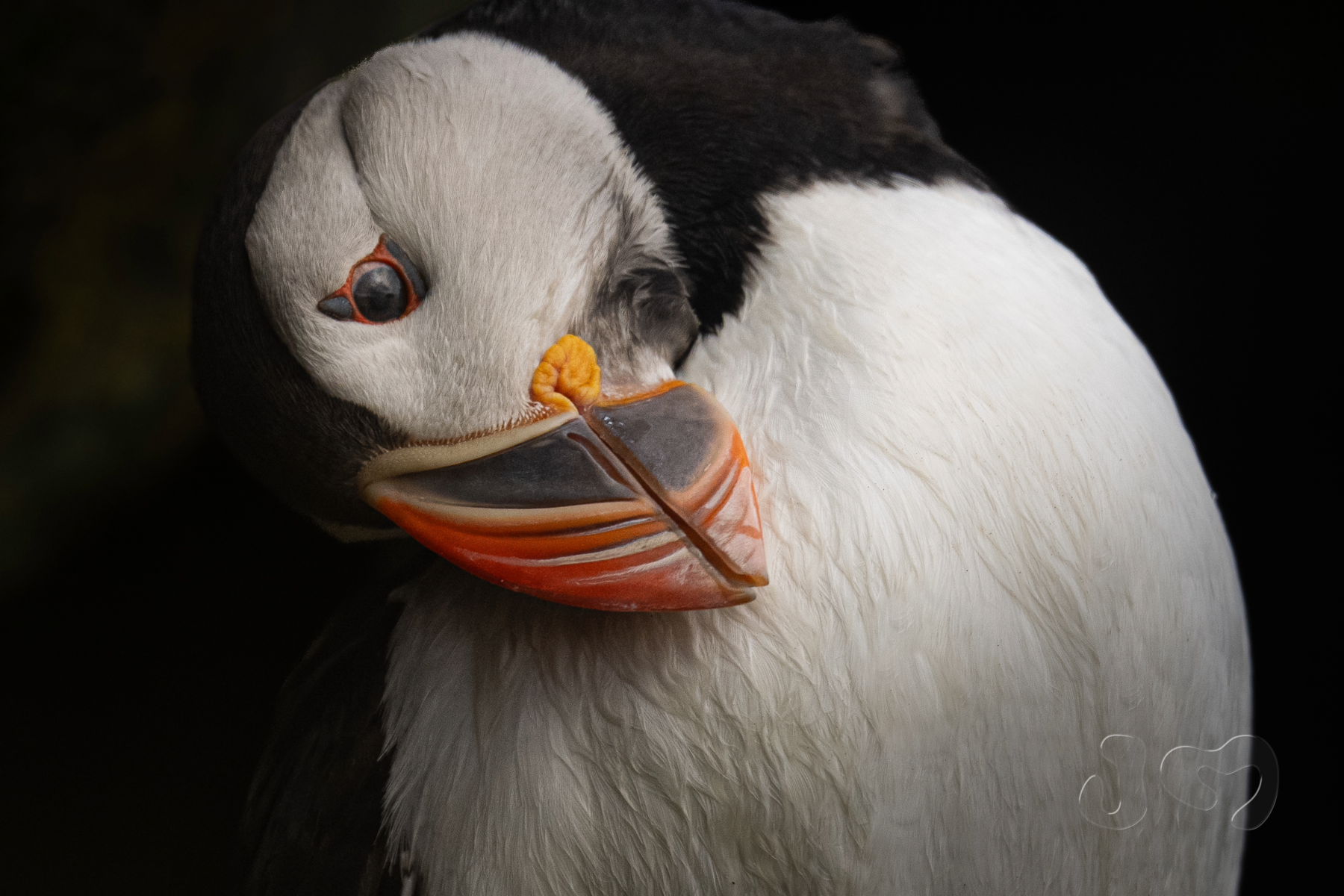
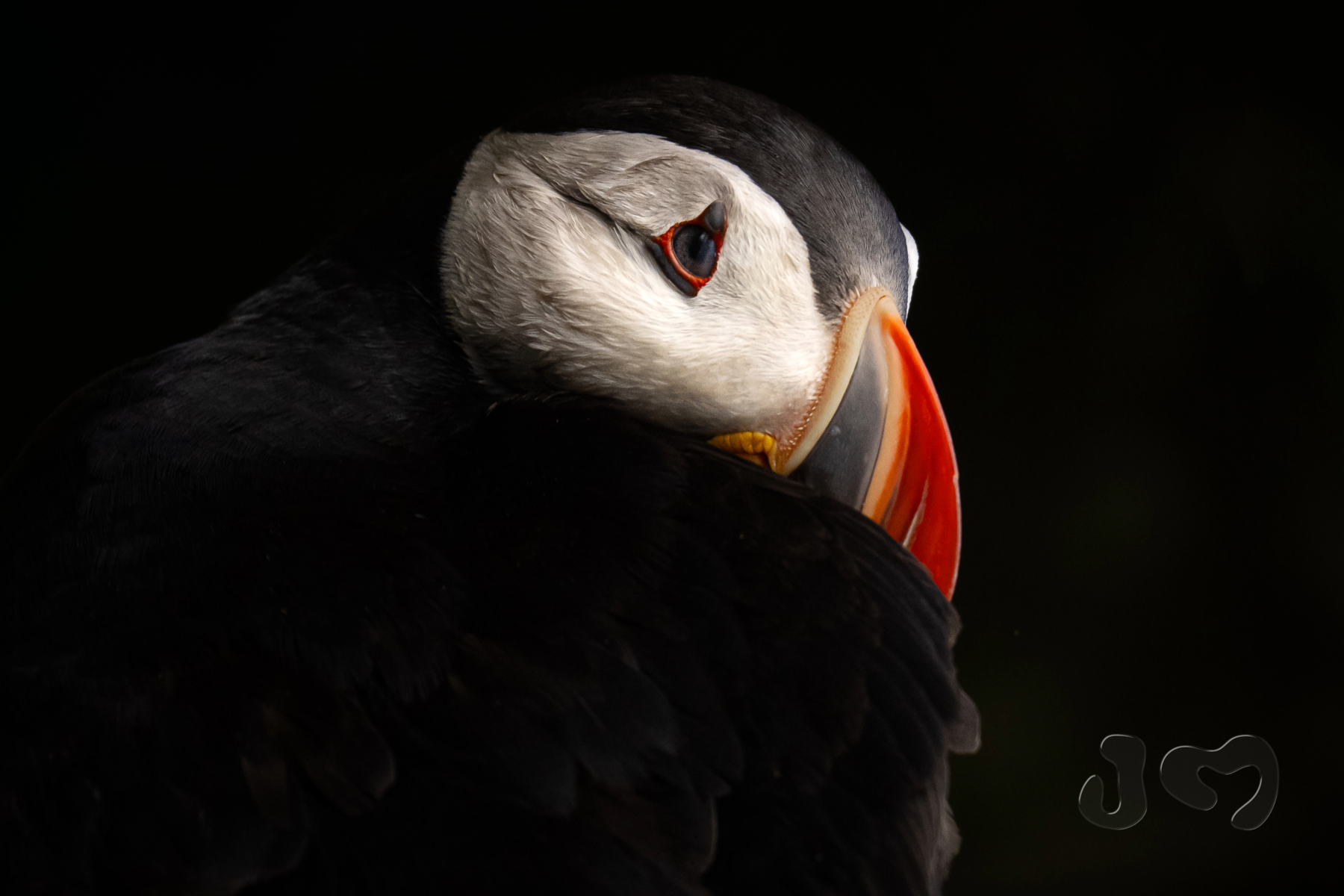
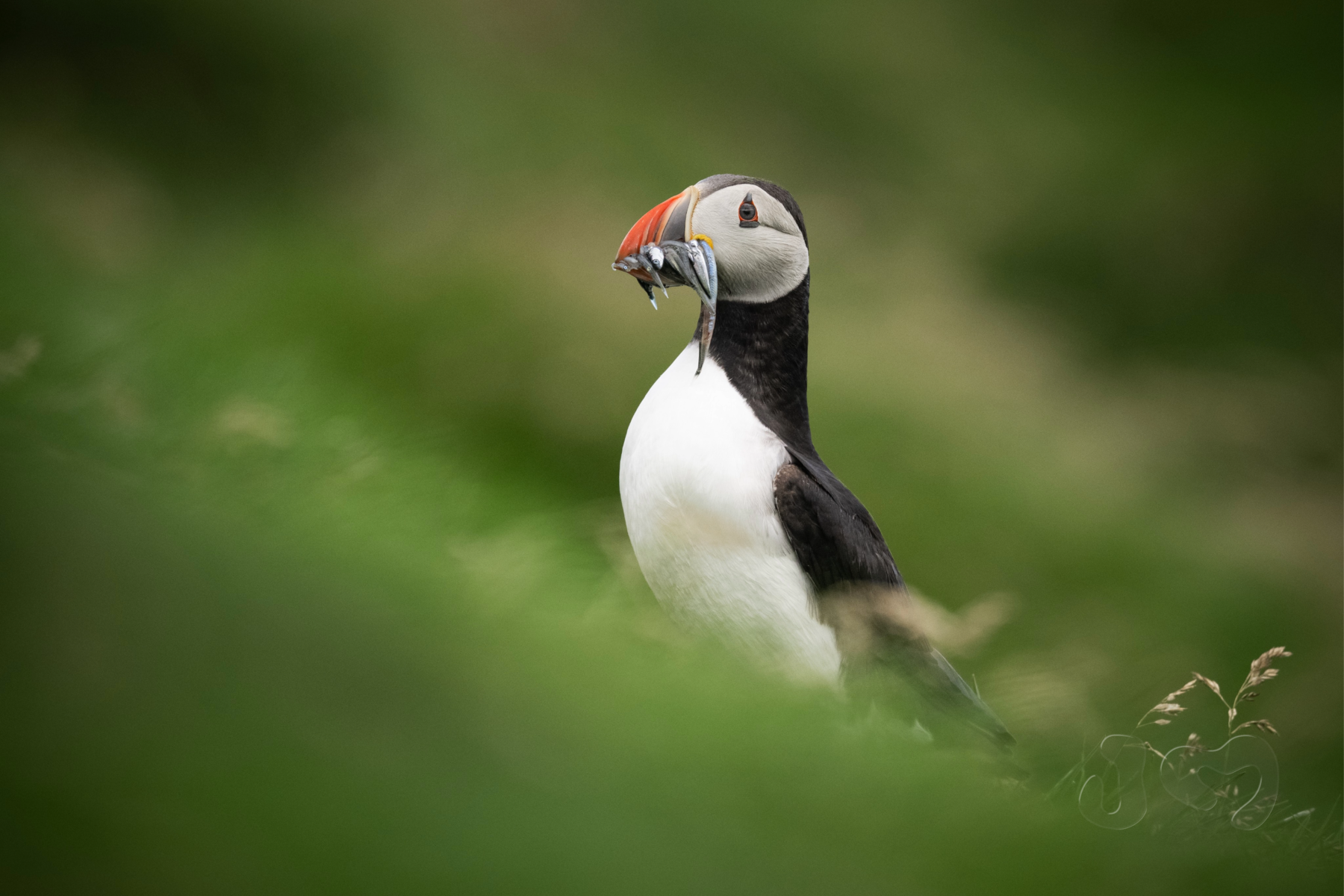
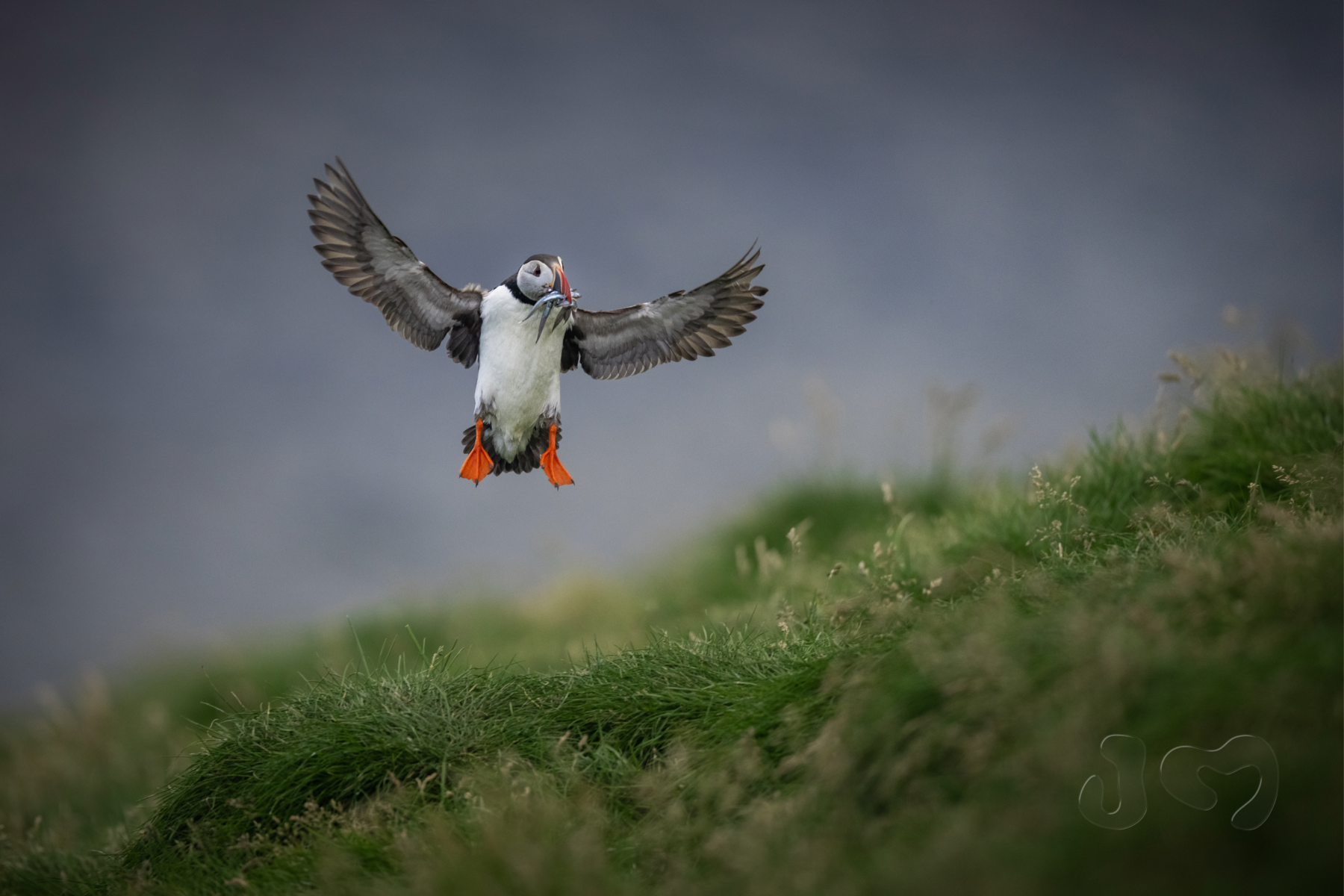
From stillness to final approach.
What We Never Had to Explain to Each Other
When I later asked Alex which moment from Iceland had stayed with her most, she wrote:
“You’re not going to like the answer—it’s long.”
She could not name a single moment.
That, in itself, was the answer.
One of her most powerful encounters on Hornstrandir had happened without me.
Alex had followed an Arctic fox at a distance for around twenty minutes. Eventually, he stopped and looked at her. Then he moved towards her, lay down in the grass less than half a metre from her feet—and fell asleep.
He remained there for almost thirty minutes.
For Alex, what made the encounter special was not that she had gone unnoticed. The fox had seen her. He knew she was there. Yet her presence did not stop him from falling asleep beside her.
In the end, Alex was the one who stood and left. She left the fox sleeping behind her.
For that encounter alone, she thought, the journey would already have been enough.
But then came the whales, the ride and finally the earthquake. To Alex, even that tremor felt like the continuation of a journey in which one intense moment followed the next. At some point, it seemed as though even the earth had joined the rhythm.
Travelling with Alex meant sharing the same days without searching for the same images. On Hornstrandir, one of us stayed on the beach while the other climbed the slope. We never had to explain patience or ambition to one another. Each gave the other the space her own way of seeing required.
Iceland did not make our photography alike. Instead, the journey revealed how much of an image lies outside its frame: the salt water during the transfer, the harsh midday light in which even an encounter never becomes a photograph, the smell of a whale, the laughter after an earth tremor—and the hand that, when in doubt, reaches first for the memory cards.
Alex’s memory cards held different seconds from mine.
Between them lay the same days.
About Alex
Alex is a wildlife photographer whose work brings together two passions that have been part of her life since childhood: animals and photography. Through her images, she aims not only to capture fleeting encounters, but to give them expression, meaning and permanence.
She shares her knowledge and experience through workshops and photography trips with people who feel the same connection to wildlife and photography.
Instagram: @alexandrovich_yo
Website: https://alexandrasurkova.com
She shares her knowledge and experience through workshops and photography trips with people who feel the same connection to wildlife and photography.
Instagram: @alexandrovich_yo
Website: https://alexandrasurkova.com